Dignity Returns, Bangkok, THAILAND
Tel: (66) 873682036 (Thai)
Email: contact@dignityreturns.org

Tel: (66) 873682036 (Thai)
Email: contact@dignityreturns.org
Tel: 54 (11) 4671-4690 / 4115-5071
Email: mundoalameda@yahoo.com.ar
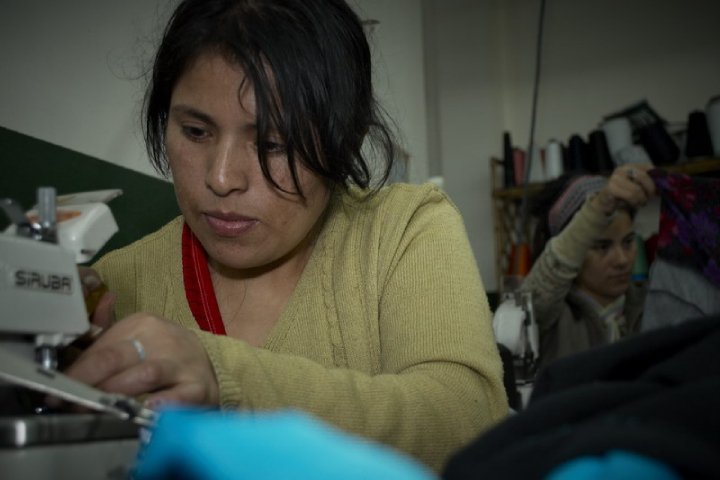
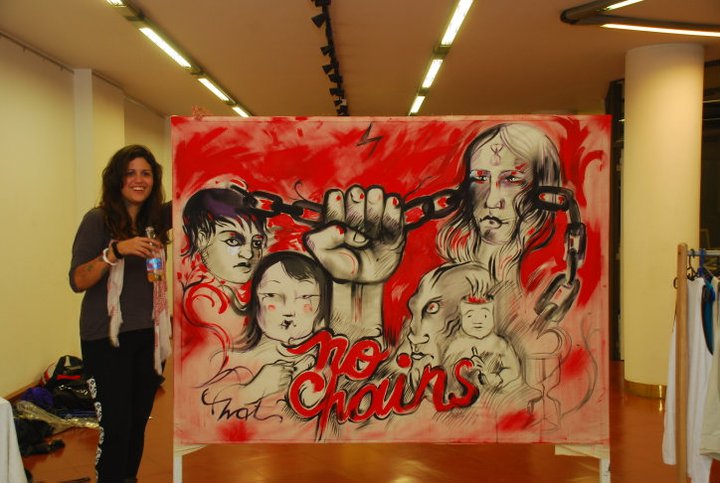
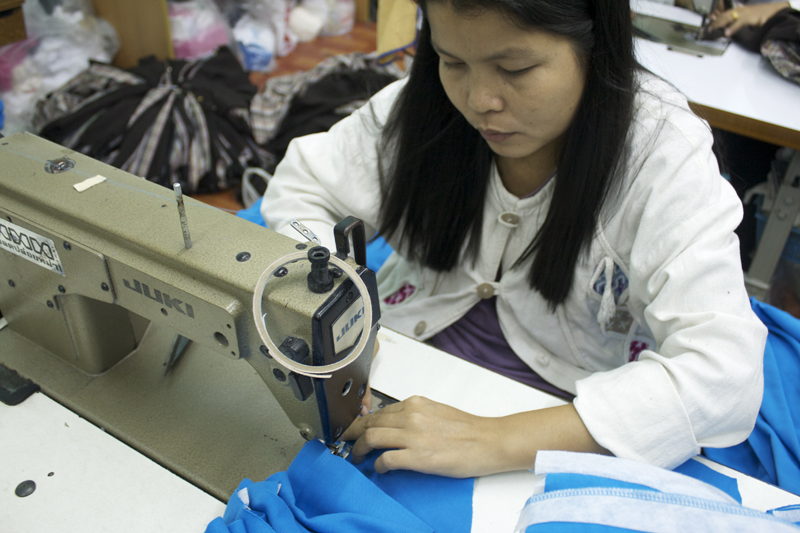
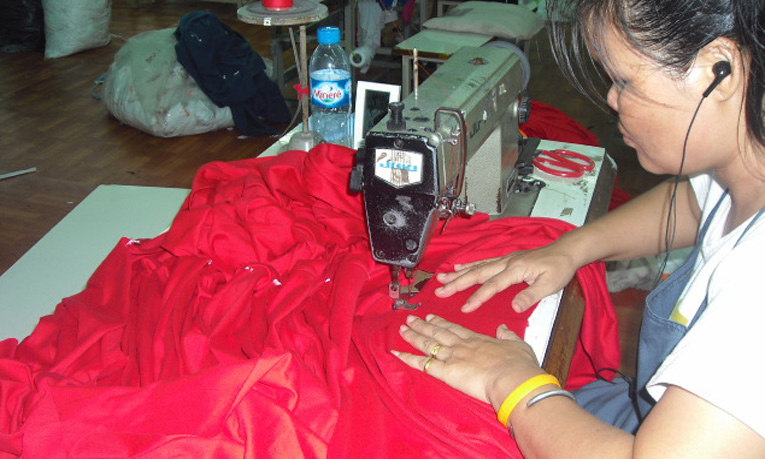
With dozens of such migrants dying trapped in a factory fire in 2004 in Buenos Aires, it is clear that Triangle Shirtwaist’s tragedy has only repeated itself at every step along the global chain of subcontract garment production.
Experience clearly shows that no improvement in workers’ conditions can be meaningful and lasting without worker representation, either through genuine unionization or through worker-ownership. The workers of No Chains know this from their own lives.
The No Chains concept is born-links workers in Asia and Latin America NO CHAINS workers want to share their simple message with the world: it can be done! Production ofquality garments can occur without exploitation, with workers controlling their own management and production.
The concept of No Chains was born when two cooperatives met at a 2009 Bangkok labour conference about workers’ responses to economic crisis. Gustavo Vera from La Alameda had been invited to share the experiences of Argentine workers in 2001 who occupied factories when their management left them bankrupt and unpaid.
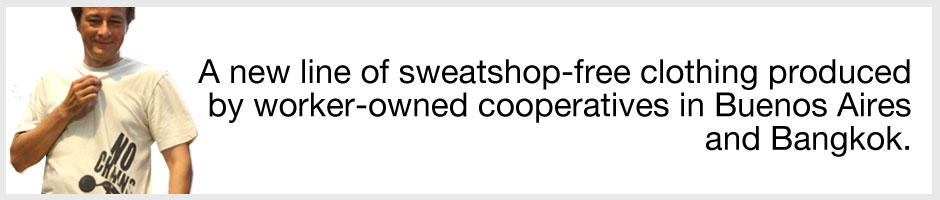
La Alameda in Argentina and Dignity Returns in Thailand thus agreed to jointly launch a global brand of sweat-free clothes, calling upon both consumers and social movement groups to help end slave labour in the garment industry. Both cooperatives were already well-known for being composed of seasoned workers who had faced forced labour conditions and now fought for the core values of worker self-management, solidarity, and decent work.
Now, the workers form a unique venture between Asia and Latin America. Though they are continents apart, they share common problems of democracy, social inequality, and poverty and exploitation of workers, especially of migrants.
In Buenos Aires and Bangkok, the models of T-shirts will be displayed in a simultaneous launch event linked by video conference technology, on June 4, 2010. The T-shirt designs that will be presented were made by designers from South Korea, Indonesia, U.S., Hong Kong and Argentina, and were chosen by the workers in an open global design contest earlier this year.
The launch will be on Friday, June 4 at 8 p.m. at the factory of Dignity Returns in Bangkok and 10 a.m. in the factory of La Alameda in Buenos Aires, Argentina.
Formed in the wake of the tragic 1993 Kader Factory fire, Paradon is the only all-female workers’ band in Thailand. A familiar fixture of strikes and other protests throughout the country, the band takes its name for a Thai word for “fraternity” or “sisterhood,” playing songs that celebrate labor solidarity. Paradon’s powerful brand of music and activism continues in a rich tradition of the “Songs for Life” that have mobilized ordinary Thais in their struggles against worker oppression for the past half century.
Formed in 2010 by unfairly dismissed Triumph International (The Body Fashion) Thailand garment union members with decades of sewing experience, the Friends for Friends cooperative produces sweat-free eco-bags, clothing, and underwear of excellent quality for both domestic and international markets.
Dignity Returns welcomes the music and performance of a neighborhood Youth Group to the No Chains launch festivities. On many public holidays throughout the year, the Dignity Returns factory has served as a hub for sports events and food festivals for the local community, which consists mainly of workers employed in various sweatshops scattered throughout the area.
 Las cooperativas están formadas por costureros que dejaron de trabajar en condiciones de esclavitud.Dos extremos unidos contra el trabajo esclavoJune 20, 2010 - 1:50 PM
 Thai, Argentine ex-slave workers launch global sweatshop-free garment brand: NO CHAINSJuly 11, 2009 - 2:02 AM
 No Chains 2009 First ContestJuly 10, 2009 - 6:33 PM
Workers have no other boss, but own and manage the business themselves, and make significant decisions in an assembly together and equally.
"
"
How is No Chains different from other brands?
In No Chains, the producing factories have matured through their efforts to survive while keeping their internal democratic nature as well as external solidarity with other workers in struggle. They demonstrate that there is no reason that exploitation and sweatshop conditions should be condsidered ‘necessary’ parts of today’s garment industry.
What is a worker cooperative?
There are different ways to define a worker cooperative, but in the view of No Chains, the chief criteria are:
In addition to the above criteria, cooperatives that join No Chains will be those that actively support other workers’ struggles, whether by helping to form or to defend independent trade unions or by helping other worker cooperatives.
How No Chains will support workers’ struggles
There are several ways that No Chains plans to support the movement of workers against slave labour, or exploitative work, in the garment industry:
How can a union or worker cooperative join No Chains?
To join No Chains as a producer, one must be a worker cooperative that meets the criteria stated above. After a certain level of T-shirt sales have been achieved and the model of cooperation in No Chains has been stabilized, new worker cooperatives will be invited to join, and in each case, the decision will be taken jointly by all the members of No Chains.
However No Chains welcomes all groups of garment workers in the world to share their struggles in reports, photos, and videos, which No Chains will try to publicize through its website and other activities.
Will you make only T-shirts?
No, T-shirts are just our products to start with. It will start by adding on other garment cooperatives, but in the future we plan to add on cooperatives producing all kinds of products, including bags, ceramics, books and so on.
We will add on diverse groups, and will be almost like a holding company – against forced labor.
How can the public support No Chains and the campaign for an end to sweatshops?
Inviting the public to participate: make No Chains a successful global sweatshop-free brand!
No Chains must be strongly recognized as a brand, to have maximum impact in highlighting workers’ struggles in the garment industry and to offer a viable alternative model of decent work that exists outside the chains of exploitation that are the typical features of the global supply chain. As Naomi Klein clearly pointed out in her book No Logo, the chief way that brands such as Nike, Ralph Lauren or Tommy Hilfiger attract customers is by their image, not by their materials, workmanship, or quality alone.
If decades experience in labor struggles have taught the members of both Dignity Returns and La Alameda, it is that word of mouth is key! News on the grapevine about upcoming layoffs at a Thai factory gives union leaders time to prepare for a fight with management. Whispered conversations about sweatshops harbouring trafficked migrant workers gives members of La Alameda crucial information needed to locate these clandestine sites and denounce their managers.
Now No Chains asks everyone opposed to sweatshop-produced garments to use this same word of mouth – please spread the word! No Chains must become a brand that social movement activists as well as ethical consumers value no less than they would value other famous brands like Ralph Lauren, the GAP or other costly brands.
With an established following, No Chains can use its public presence not only to denounce other exploitative brands through campaigns, but also to offer a living model of non-exploitative production that others can emulate.
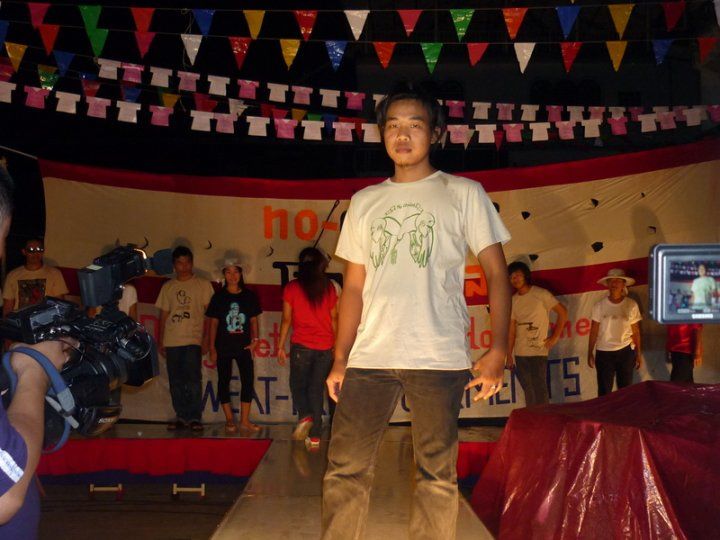
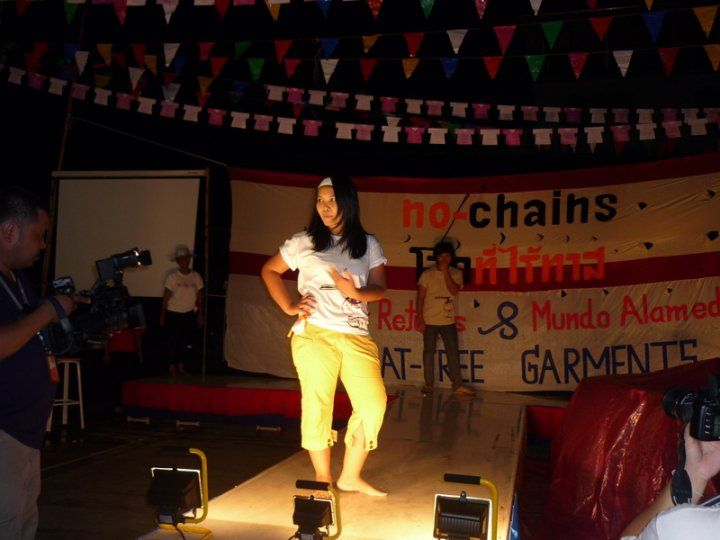
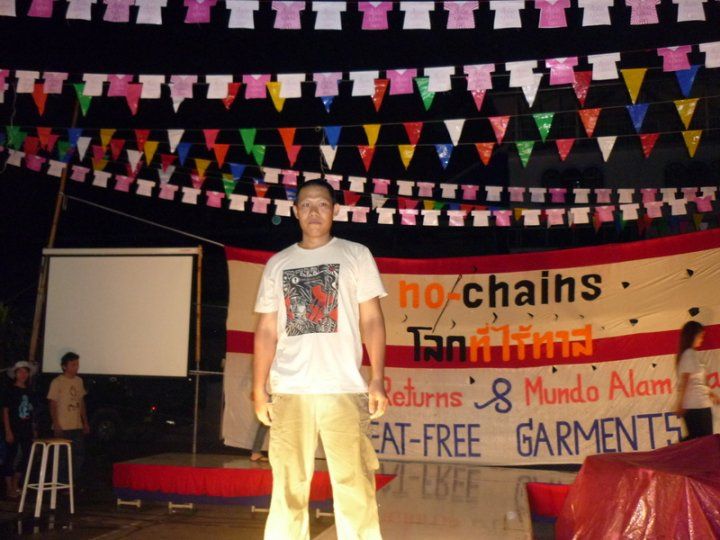
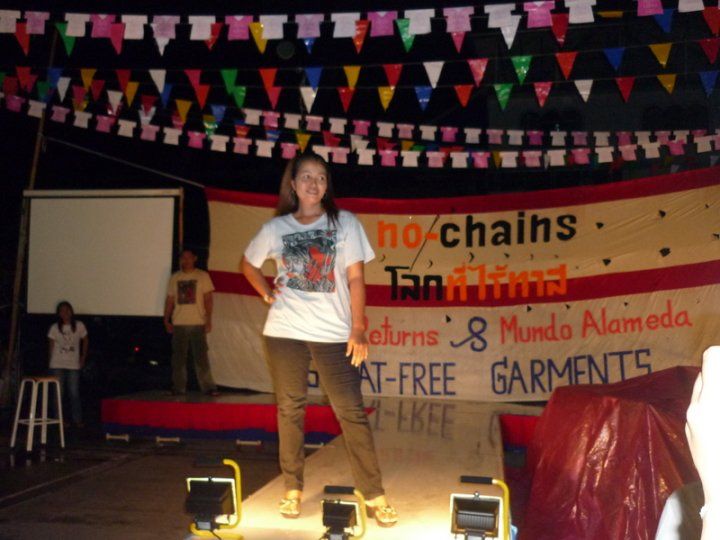
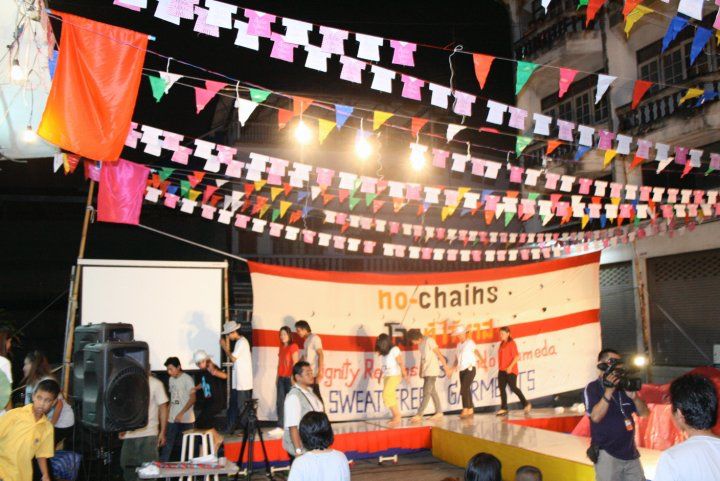
The cooperative “20 of December,” popularly known as “La Alameda” (so called, for the name of the bar where the head of the organization currently is located), grew out of a popular assembly in the neighbourhood of Parque Avellaneda, forming in the year 2002 a way to answer some of the most pressing problems of the moment then: the hunger and unemployment that had become rampant since the economic crisis gripping Argentina in 2001.
After starting by providing food to the unemployed in a community cafeteria, La Alameda considered it necessary to begin providing a source of genuine work as a way for people to recover the culture of work and their dignity. Thus several cooperative were formed, and 20 of December is the garment factory that now is operating inside La Alameda.
La Alameda has also helped form the Union of Garment Workers (Union de Trabajadores Costureros – UTC), which unites both formal and informal garment workers to form democratic unions in garment factories. Now La Alameda continues the fight for decent work for all people by exposing sex trafficking, child labour on farms, and slave labour in the agriculture industry as well as garment industry. The activists of La Alameda have been nicknamed The Exploiter-hunters.
About No Chains, Gustavo Vera says:
“Through purposeful action we are denouncing the persistence of slave labour, which has global markets and which leads major brands to take advantage of vulnerable groups and of lax legislation in order to impose forced labour in various parts of the world.”
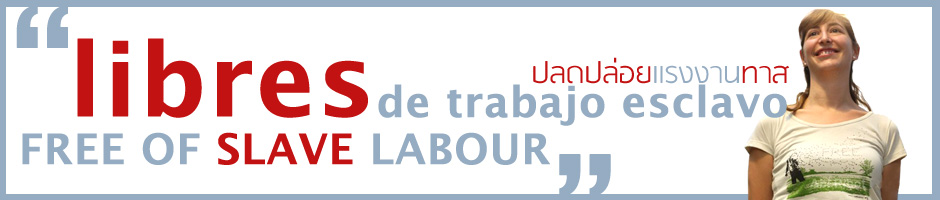
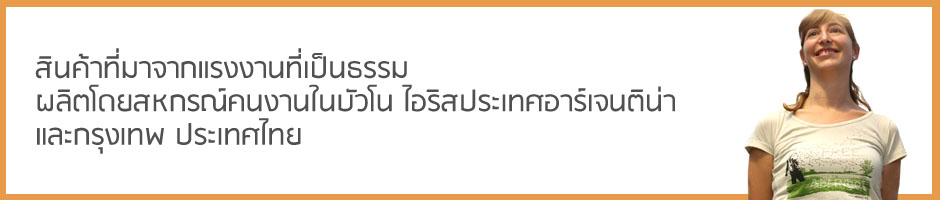
 Las cooperativas están formadas por costureros que dejaron de trabajar en condiciones de esclavitud.
https://www.dignityreturns.org/folders/2010/06/mundo-1.jpg
376
500
Dignity Returns
https://www.dignityreturns.org/folders/2014/10/dr-base-logo.png
Dignity Returns2010-06-20 13:50:032021-07-11 20:01:48Dos extremos unidos contra el trabajo esclavo
Las cooperativas están formadas por costureros que dejaron de trabajar en condiciones de esclavitud.
https://www.dignityreturns.org/folders/2010/06/mundo-1.jpg
376
500
Dignity Returns
https://www.dignityreturns.org/folders/2014/10/dr-base-logo.png
Dignity Returns2010-06-20 13:50:032021-07-11 20:01:48Dos extremos unidos contra el trabajo esclavo https://www.dignityreturns.org/folders/2009/07/nochains-07-11-2-29-14.jpg
524
700
Dignity Returns
https://www.dignityreturns.org/folders/2014/10/dr-base-logo.png
Dignity Returns2009-07-11 02:02:062021-07-12 17:00:20Thai, Argentine ex-slave workers launch global sweatshop-free garment brand: NO CHAINS
https://www.dignityreturns.org/folders/2009/07/nochains-07-11-2-29-14.jpg
524
700
Dignity Returns
https://www.dignityreturns.org/folders/2014/10/dr-base-logo.png
Dignity Returns2009-07-11 02:02:062021-07-12 17:00:20Thai, Argentine ex-slave workers launch global sweatshop-free garment brand: NO CHAINS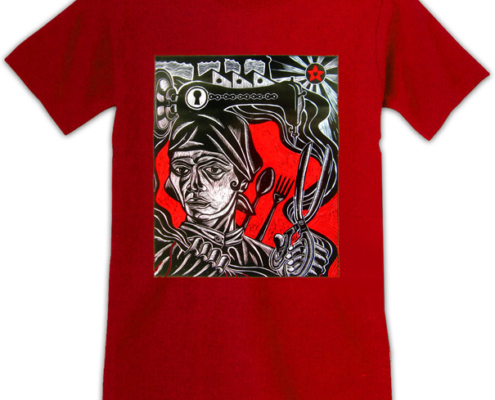 https://www.dignityreturns.org/folders/2021/07/2011_design_605x800_yusuf-2.jpg
800
605
Dignity Returns
https://www.dignityreturns.org/folders/2014/10/dr-base-logo.png
Dignity Returns2009-07-10 18:33:172021-07-10 18:47:06No Chains 2009 First Contest
https://www.dignityreturns.org/folders/2021/07/2011_design_605x800_yusuf-2.jpg
800
605
Dignity Returns
https://www.dignityreturns.org/folders/2014/10/dr-base-logo.png
Dignity Returns2009-07-10 18:33:172021-07-10 18:47:06No Chains 2009 First Contest
 Las cooperativas están formadas por costureros que dejaron de trabajar en condiciones de esclavitud. Dos extremos unidos contra el trabajo esclavo